
Rotator Cuff Injuries
The rotator cuff is a group of muscles surrounding the shoulder. They are made up of the supraspinatus, infraspinatus, subscapularis, and teres minor muscles. While these muscles are small and individually not that powerful, they play a critical role in how the shoulder moves. Without your rotator cuff, you would not be able to lift your arm very far from your side. The job of the rotator cuff is to guide the humerus head and slide it down within the socket (glenoid) so that it clears the bony shelf above the socket called the acromion. When the rotator cuff is weak, the head of the humerus rides up rubbing against the acromion above it.
The rotator cuff takes a lot of abuse over a lifetime and tearing is very common as we age. Many factors can lead to early injury of the rotator cuff include sport injuries, falls onto the shoulder or arm, repetitive lifting or movements, or poor posture.
Rotator cuff tears can be minor, causing pain and inflammation, or major which can require surgery. With surgery, depending on a variety of factors such as the quality of the tissue, the extent of the tear and other health factors, the recovery can take between 3-6 months. Physical therapy is a very important part of conservative management, preparation for surgery, and rehabilitation.
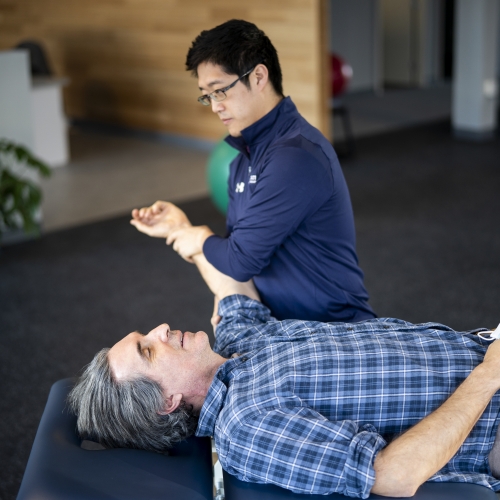
How physical therapy helps
Often, with small tears, physical therapy can dramatically reduce pain, improve function and allow you to lead an active lifestyle without surgical intervention. Our physical therapists will work with you to improve your shoulder range of motion, restore proper joint mobility, reduce inflammation, relieve pain, and improve the strength of your rotator cuff.
If surgery is needed, we work closely with your surgeon to follow his/her rehabilitation protocol. In the beginning of your course of care, treatment focuses on pain reduction, education on protection of the surgically repaired tissue(s), and maintaining range of motion. Over time, as your surgeon protocol allows, range of motion is increased, joint mobility is restored, and finally strengthening is initiated.
As your shoulder heals and the surgeon’s protocol allows, strengthening exercises are progressed and functional activities are performed. Call Bay State Physical Therapy today to learn more about how we help your rotator cuff perform better and relieve your shoulder pain.