






A stiff neck after a restless night or a long day at the computer may not seem like a reason to seek help. You might try stretching, changing your pillow, or giving it a few days to improve. Sometimes that is all it takes. But when the discomfort keeps returning or starts affecting your routine, it may be time to stop waiting and time to find out what is actually going on.
Neck pain does not always begin with an injury. It often develops gradually, starting with symptoms that are easy to overlook. Maybe you have trouble turning your head as far as you used to. Perhaps your neck feels tight at the end of the workday, or you wake up with stiffness that takes longer to ease.
Paying attention to these early changes can help you address the problem before it begins interfering with more of your life.

Neck pain feels different for everyone. For some people, it is a dull ache that develops after working at a computer. For others, it feels like tightness across the shoulders or soreness at the base of the skull. It may only appear during certain activities at first, then become more frequent over time.
Some early signs include:
These symptoms do not always mean that something serious is wrong. Still, they are worth paying attention to, especially if they are getting worse or beginning to change the way you move.


It is easy to underestimate how much you depend on comfortable neck movement until routine activities become more difficult.
During the workday, neck pain can make it harder to focus, sit through meetings, or spend time at a computer. You may find yourself rubbing your neck, adjusting your chair, or struggling with a headache by the end of the day.
At night, discomfort can make it difficult to fall asleep or cause you to wake when you change positions. A poor night’s sleep can then affect your energy, mood, and ability to manage the next day.
Driving can also become uncomfortable. Turning to check a blind spot, looking over your shoulder while backing up, or sitting through a long commute may become difficult. With holiday travel approaching, additional time in the car, on a plane, or on a train can place even more strain on an already sensitive neck.
You may also notice that you are exercising less, avoiding household projects, or saying no to activities you would usually enjoy. Over time, those small adjustments can add up. Neck pain can begin shaping your routine without you fully realizing it.
Many people hope neck pain will eventually go away on its own. If your symptoms have lasted more than a few days, keep returning, or are interfering with your usual activities, an evaluation with a physical therapist can help you understand what is happening.
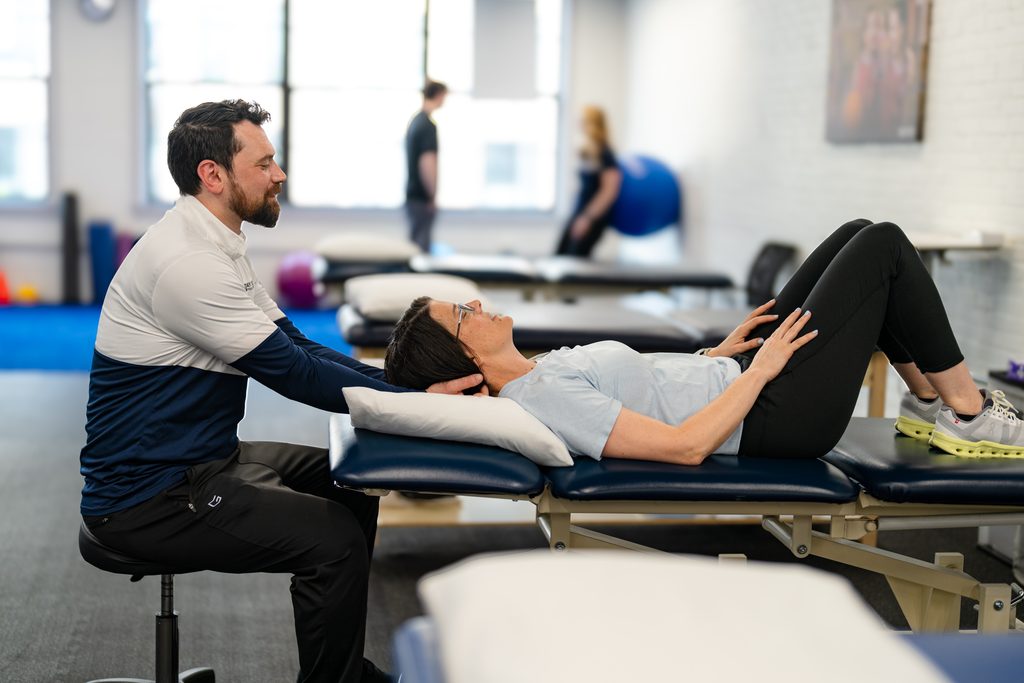
Your physical therapist will ask about your symptoms, daily routine, work environment, and the movements that make you feel better or worse. They will also assess how your neck and surrounding areas move and function.
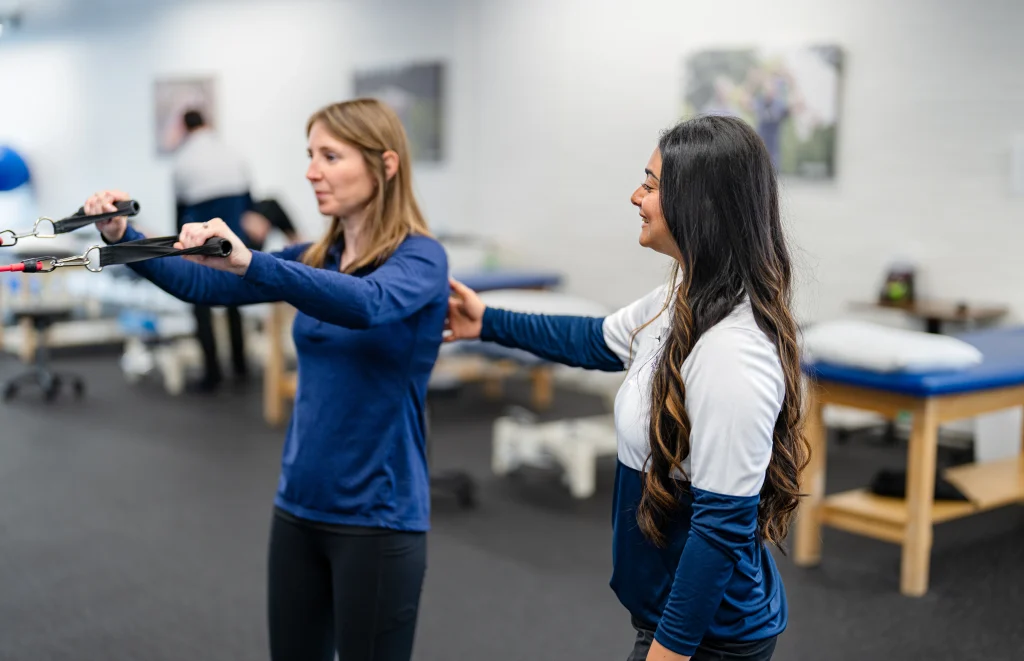
From there, your therapist will develop a plan based on what you need and what you want to get back to doing. Treatment may include hands-on care, exercises to improve mobility and strength, and simple changes to the way you work, sleep, drive, or use your devices.
You do not have to wait until the pain becomes severe. Getting started earlier can give you useful guidance before you begin limiting activities or changing how you move to avoid discomfort.

Between work, family responsibilities, travel, and holiday plans, finding time for an appointment may feel difficult. Bay State Physical Therapy offers both in-clinic and Virtual Physical Therapy appointments, giving you options for how you begin care.
Virtual PT allows Massachusetts residents to meet one-on-one with a licensed physical therapist through a secure video visit. During the appointment, your therapist can talk with you about your symptoms, observe how your neck moves, review your workstation or home setup, and guide you through exercises and practical adjustments.
Virtual appointments are often available within 24 to 48 hours. You will also continue working with the same physical therapist, allowing you to build a relationship and make progress with someone who understands your goals.
Depending on your insurance plan, you may be able to begin physical therapy without first getting a referral from your doctor. This is known as Direct Access and may help you schedule an evaluation sooner.
The final months of the year fill up quickly. Work deadlines, family plans, travel, shopping, and celebrations can make it tempting to put your own health aside and wait until January.
But if neck pain is already affecting your work, sleep, driving, or daily activities, now is the time to address it. You have already paid for your health insurance benefits, so do not let them go unused. Many plans reset at the end of the year, which means the benefits available to you today may expire when the new year begins.
Starting physical therapy now gives you time to improve your movement, build strength, and learn ways to manage your symptoms before the holiday season reaches its busiest point.
Do not let neck pain decide how you spend the rest of your year. Schedule an evaluation with Bay State Physical Therapy today so you can be moving better, feeling better, and living better by the peak of the holiday season.



Think about how often you look at a screen throughout the day. You may begin with emails on your computer, check your phone between meetings, scroll through social media in the evening, and finish the day watching television or reading on a tablet.
That screen time can increase during the holiday season. Online shopping, travel planning, group texts, video calls, and searching for recipes can all mean more time looking down or staying in one position.
Screens are part of everyday life, and using them does not automatically lead to neck pain. The problem often comes from spending too much time in the same position without giving your body a chance to move.

“Tech neck” is a common term used to describe the stiffness, soreness, or tension that can develop when you spend long periods using a phone, tablet, or computer.
When you look down at a device or lean toward a screen for an extended time, the muscles around your neck, shoulders, and upper back have to work harder to support that position. You may begin to notice tightness across your shoulders, soreness at the base of your neck, or a headache after a long stretch of screen time.
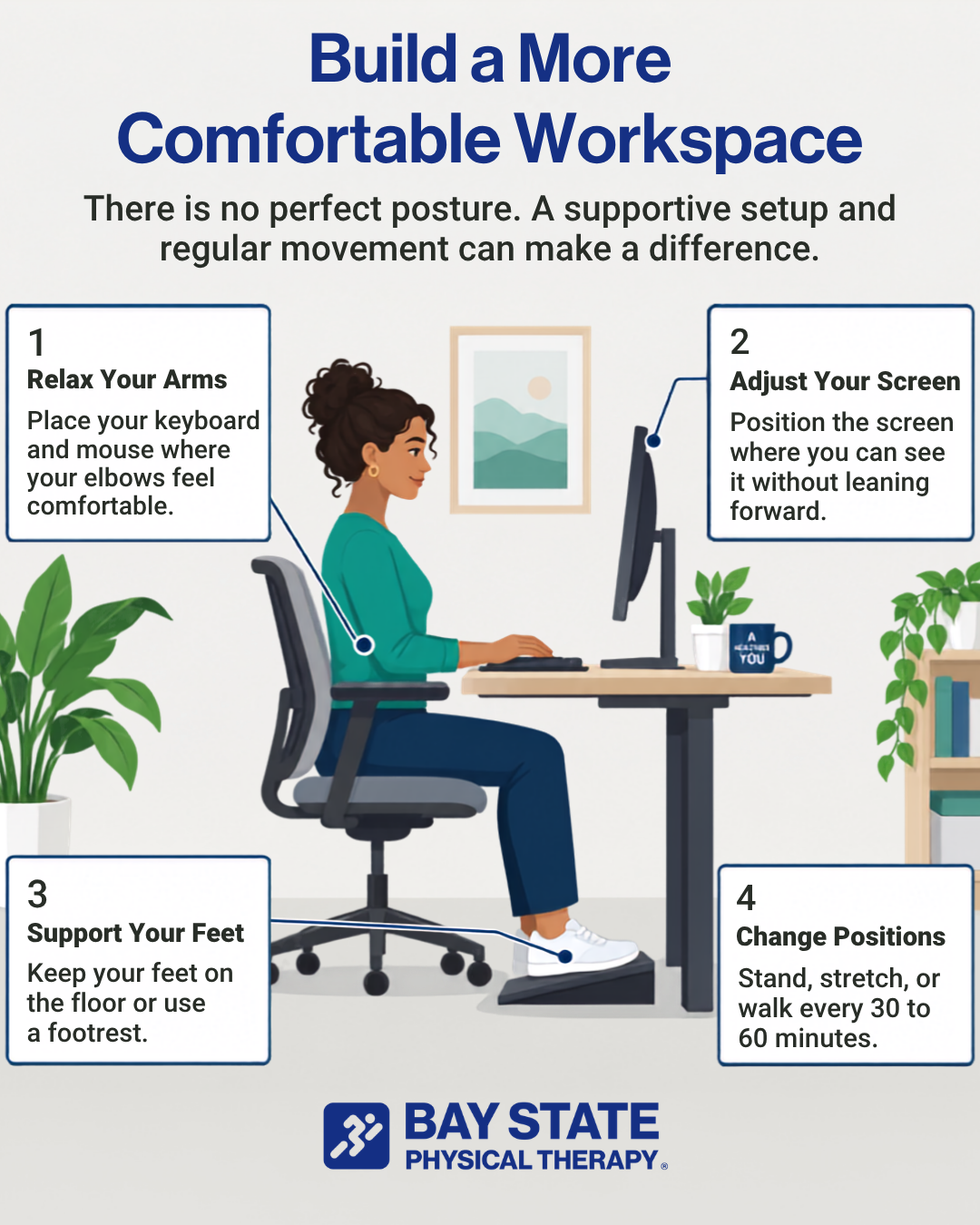
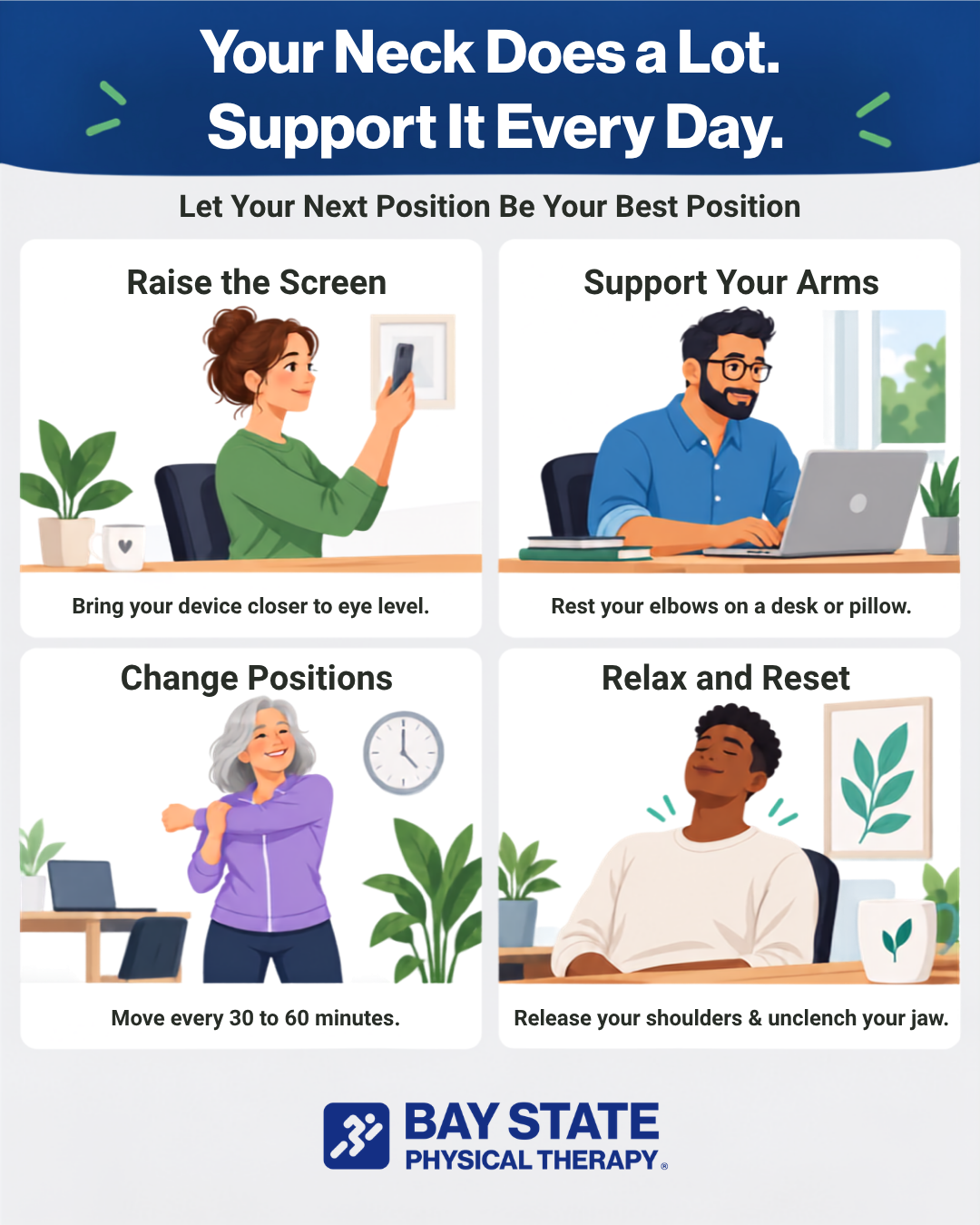
The good news is that you do not need to find one perfect posture and hold it all day. Your body is designed to move. Changing positions regularly can be more helpful than trying to sit perfectly still.
If you regularly look down at your phone, try bringing it closer to eye level. You can rest your elbows on a table, desk, or pillow to keep your arms from getting tired.
When working at a computer, place the screen where you can see it comfortably without leaning forward or looking down for long periods. Make sure the text is large enough to read without moving closer to the monitor.
These small changes can reduce the amount of time your neck spends in one position.
It is easy to lose track of time when you are working, shopping online, or scrolling through your phone. Set a reminder to change positions every 30 to 60 minutes. Stand up, walk around, roll your shoulders, or gently turn your head from side to side.
The break does not need to be long. Even a minute or two of movement can help interrupt a long stretch of sitting.
If you are watching a movie, catching up on a favorite show, or spending time on a video call with family, use natural pauses as reminders to move. Get up between episodes, stand during part of the call, or stretch during a commercial break.
Tech neck is not limited to the workplace. Consider how you use screens in the rest of your home.
Looking down at a tablet on your lap or lying on the couch with your neck propped at an awkward angle may feel comfortable at first, but discomfort can build over time. Use pillows or a supportive surface to bring the device closer to eye level, and change your position before you begin feeling stiff.
The same advice applies while traveling. Avoid looking down at your phone for an entire flight or long car ride. When you are not driving, raise the device when possible and take safe opportunities to stand, stretch, or adjust your position.
Occasional stiffness may improve when you move or change positions. However, if your symptoms continue returning, begin affecting your sleep or work, or make it difficult to turn your head, it may be time to speak with a physical therapist.
You should also seek medical guidance if you experience persistent numbness, tingling, or weakness in your arm or hand.
Small changes to your screen setup and daily routine can make a meaningful difference. Put your screen in a more comfortable position, take regular movement breaks, and do not wait until neck discomfort becomes a constant part of your day.


If neck pain is making it harder to work, sleep, drive, or enjoy your usual activities, schedule an evaluation with Bay State Physical Therapy. We can help you understand what may be contributing to your symptoms and create a plan to help you move more comfortably.



Holiday travel has a way of leaving your whole body feeling stiff. You may spend hours behind the wheel in traffic, settle into a crowded plane with limited room to move, or sit on a train while looking down at your phone. By the time you arrive, your neck feels tight, your shoulders have crept upward, and standing up takes a little more effort than expected.
Travel changes the way we normally move. Instead of walking around throughout the day, we stay in one position for long periods. We may lean toward the steering wheel, look down at a device, or fall asleep with our head resting at an uncomfortable angle. Bags, unfamiliar seats, and the stress of staying on schedule can add to the tension.
There is no single perfect position that will keep you comfortable for an entire trip. The most helpful thing you can do is continue changing positions and give your body regular opportunities to move. A small adjustment in your seat, a brief walk through the train, or a few minutes of stretching at a rest stop can help break up a long stretch of sitting.
Planning ahead can make a difference. Wear comfortable clothing, use a small pillow or rolled towel for support if needed, and keep frequently used items within easy reach. When it is safe to do so, take a break before your body becomes noticeably stiff.
The following exercises can help loosen your neck, shoulders, back, and hips during or after a long trip. Some can be performed while seated as a passenger. Others are best saved for a rest stop, airport terminal, train station, or after you arrive at your destination. Never stretch or exercise while driving.

This month’s travel stretches are presented by Dr. Jackie Hansen, a chiropractor at MCR Chiropractic in Pembroke, Massachusetts, located alongside Bay State Physical Therapy.
A Massachusetts native raised on Cape Cod, Dr. Jackie earned her Bachelor of Health Science degree from the University of Hartford and her Doctor of Chiropractic degree from Northeast College of Health Sciences.
Her interest in chiropractic care began through her own experience as a competitive gymnast. After seeing how chiropractic care helped her recover from injuries and return to the sport she loved, she knew she wanted to provide that same support to others.
“Holiday travel often means spending more time sitting and less time moving. Taking a few minutes to change positions, stretch, and walk when it is safe can help you arrive feeling more comfortable and ready to enjoy time with the people you traveled to see.”
Dr. Jackie has additional training in sports and human performance, custom stabilizing orthotics, nutrition, and instrument-assisted soft tissue therapy. She works with patients from many different backgrounds and uses education, individualized care, and a range of hands-on techniques to help them move and feel their best.

What is it?
Relieve neck tension and activate/ strengthen anterior neck muscles
How to do it!


What is it?
Relieve upper back pain/ tension, strengthen muscles between the shoulder blades, and improve posture
How to do it!


What is it?
Improve hip/knee/leg flexibility posture and reduce leg tension
How to do it!


What is it?
Relieve lower back discomfort and improve lumbar stability
How to do it!


What is it?
Reduce discomfort in the lower back/ hip/ groin region and improve posture
How to do it!
A little movement can make a long trip feel more manageable. Change positions regularly, take breaks when it is safe, and use these stretches to help reduce stiffness along the way. If neck, shoulder, or back discomfort continues after you arrive home, schedule an evaluation with Bay State Physical Therapy. Our team can help you move more comfortably and stay ready for everything the season brings.


A headache can make it difficult to concentrate, look at a screen, or get through your normal routine. A migraine can stop the day altogether, sending you in search of a quiet, dark room until the symptoms ease.
For people who experience headaches or migraines regularly, the effects extend beyond the discomfort itself. You may worry about when the next one will begin, avoid certain activities, or struggle to keep up with work and family responsibilities. Sleep, exercise, driving, and time with friends can all become more difficult.
Headaches and migraines can have many causes and triggers. Understanding what you are experiencing is an important first step toward finding the right care.


The word “headache” describes several different conditions. Although some symptoms overlap, each type can feel different and require a different approach.
Tension-type headaches often feel like pressure or a tight band around the head. The discomfort may be felt on both sides and occur along with tightness in the neck, shoulders, or upper back. Stress, disrupted sleep, prolonged screen use, and staying in one position for too long can all play a role.
Cervicogenic headaches are associated with a problem involving the neck. The discomfort may begin at the base of the skull and travel toward the forehead, temple, or area behind one eye. Neck stiffness or reduced movement may occur at the same time. Certain positions or movements can make symptoms worse.
Migraines are a neurological condition. They may cause intense throbbing or pulsing, often on one side of the head. Other symptoms can include nausea, changes in vision, and sensitivity to light, sound, or smells. Some people experience warning signs known as an aura before a migraine begins, while others do not.
People who experience migraines may also have neck pain, muscle tension, or movement limitations. Addressing these physical factors can be one part of a broader care plan, but migraines often require medical care and management beyond physical therapy.
Because different headaches can share similar symptoms, you should not feel as though you have to determine the cause on your own.
Tracking your symptoms can give you and your healthcare provider useful information. Write down when your headache or migraine began, where you first felt it, how long it lasted, and what you were doing beforehand.
It can also be helpful to note:
Over time, you may begin to recognize patterns that can help guide your care.


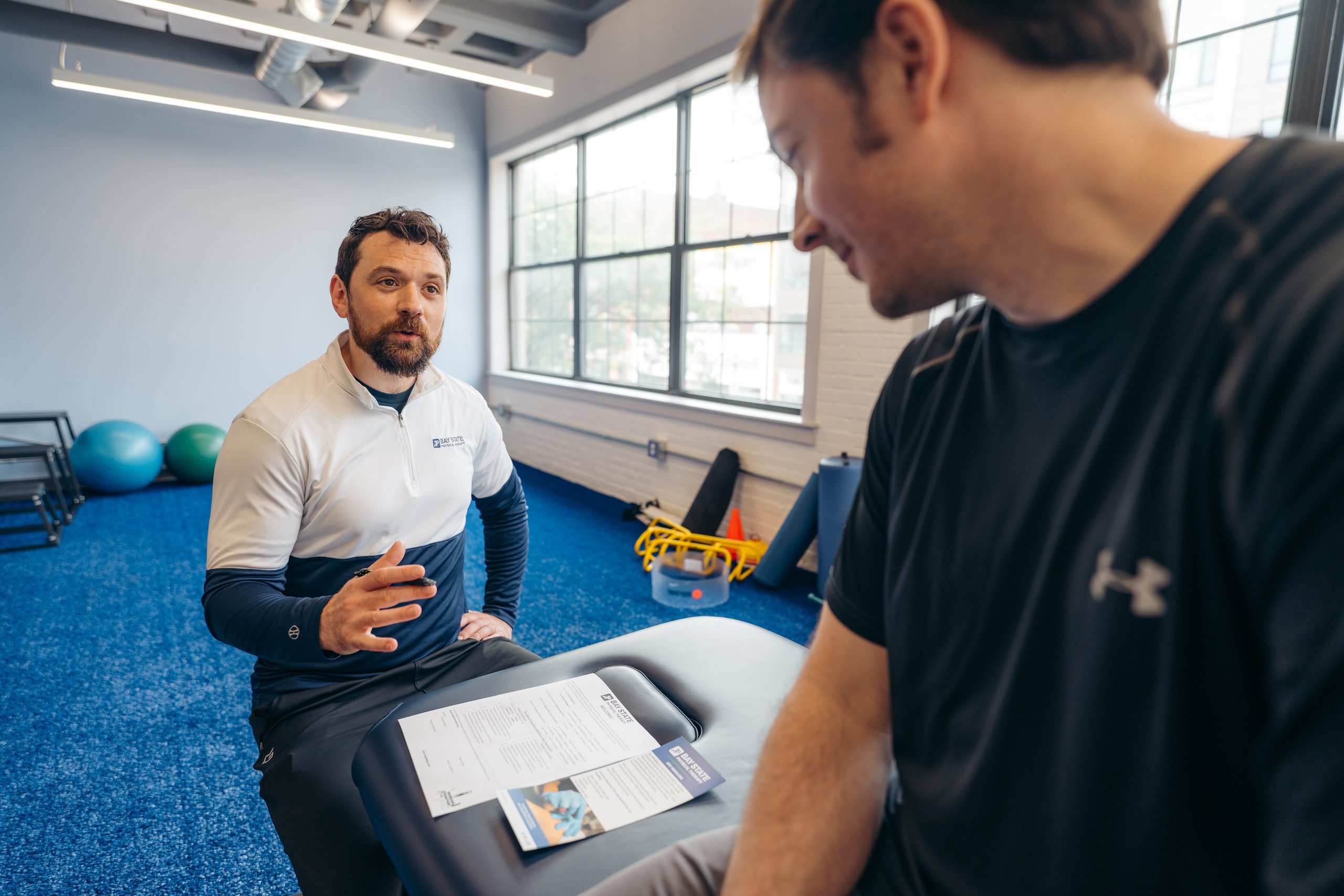
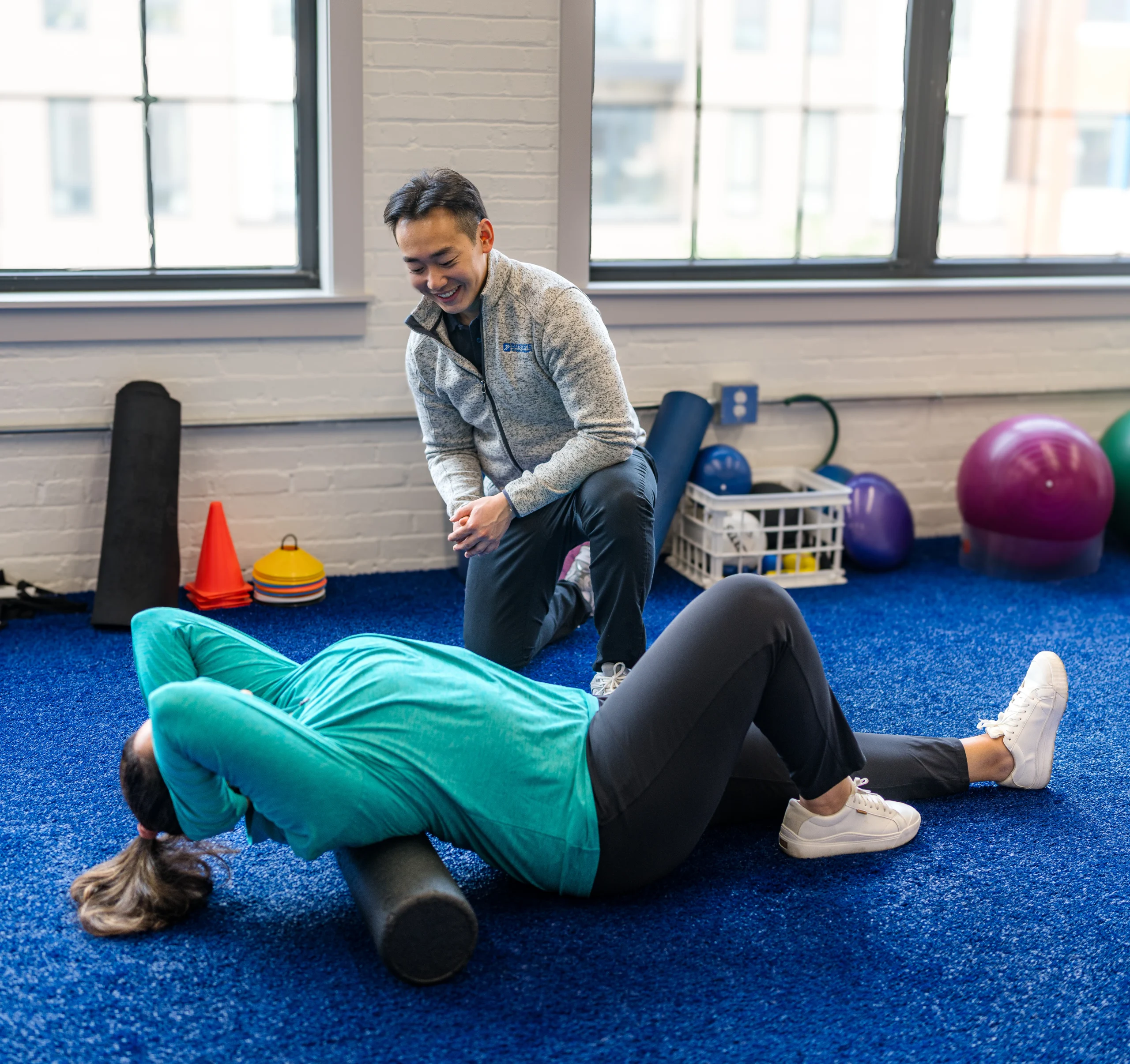
Physical therapy can help when headaches or migraines occur alongside neck pain, stiffness, muscle tension, weakness, or changes in movement.
Your first visit will begin with a conversation about your symptoms, health history, and the ways headaches or migraines affect your life. Your physical therapist will assess how your neck, shoulders, and upper back move and function. They will also ask about your work environment, screen habits, sleep, and activities that seem to affect your symptoms.
Based on the evaluation, your care may include hands-on treatment, mobility exercises, strengthening, and strategies for managing daily activities. Your therapist can also help you adjust your workstation, find more comfortable ways to use your devices, and build movement breaks into your day.
Physical therapy does not replace the medical care you may need for migraines. It can work alongside care from your physician or other healthcare providers to address physical symptoms and limitations that may be adding to your discomfort.
When you are dealing with a headache or migraine, driving to an appointment or spending time in a busy clinic may feel overwhelming. Virtual Physical Therapy gives Massachusetts residents the option to meet one-on-one with a licensed Bay State physical therapist from home.
During a secure video appointment, your therapist can discuss your symptoms, observe how your neck and shoulders move, review your workstation or home environment, and guide you through appropriate exercises. Appointments are often available within 24 to 48 hours, and you will continue working with the same physical therapist throughout your care.
Most headaches are not medical emergencies, but certain symptoms should not be ignored. Seek immediate medical care for a sudden and unusually severe headache or a headache that follows a significant injury.
You should also seek prompt care if a headache occurs with confusion, fainting, fever, difficulty speaking, weakness, loss of coordination, or a significant change in vision. Talk with your healthcare provider if your headaches are new, becoming more frequent, changing in pattern, or interfering with your daily life.



Recurring headaches and migraines can affect far more than the hours when symptoms are at their worst. They can influence how you work, sleep, exercise, travel, and make plans. You do not have to keep adjusting your life without understanding what may be contributing.
If your headaches or migraines occur alongside neck pain, stiffness, muscle tension, or difficulty moving comfortably, schedule an evaluation with Bay State Physical Therapy. Don’t suffer – find relief today for better days ahead!