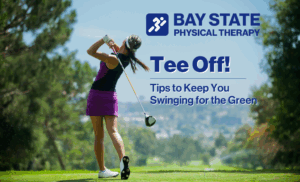

Summer is the season when many of us hit the golf course and discover for all its leisurely hype, that golf is still a very athletic activity. It doesn’t take much more than a bucket of golf balls to cause a sharp twinge of pain in our backs. It also quickly reminds us of the forgotten off-season conditioning program we promised to begin when the last golf season ended. Whether you’re an avid golfer or you’ve just picked up your first club, optimal health and mobility can improve your performance and limit the likelihood of injury. You may be surprised to learn that a physical therapist can help you strike the ball at your best!
5 Physical Therapist-Approved Golf Tips
We work with golfers of all ages and abilities. With our expertise in the musculoskeletal system, we understand the unique stresses on the body and the mechanics needed for a successful swing. As experts in injury prevention, we can assess each golfer’s mobility to help them perform at a high level while avoiding injuries and pain. Here are five tips to lower your risk of injury this golf season.
Warm-Up
Golf requires a rotational swing that generates club-head speed. The muscle contractions that create this swing culminate in the ideal ball strike and trajectory off the club. Limitations in joint mobility can negatively impact swing mechanics, shot distance, and accuracy. Lack of flexibility can also lead to muscle injury. Always take at least 10 to 15 minutes to prepare your body for golf with minor exercises such as jogging, ab exercises, or light stretching. Not sure where to start? Ask your physical therapist!
Address Your Aches & Pains
According to research, 7 in 10 amateur golfers and 9 in 10 professional golfers will suffer a golf-related injury at least once in their lifetime. That means you should prioritize your health and address those nagging pains quickly. The longer you wait, the longer the recovery can last. If you’re experiencing any aches or pains, seek treatment from your physical therapist.
Walk the Golf Course
Walking the golf course offers many health benefits. It allows you to stay warmed up and the physical demands of walking can help you build and maintain strength and endurance, which benefits your heart health. Fun fact: The distance walked for 18 holes is usually five to seven miles!
Footwear Matters
You invest in your clubs and have your favorite brand of ball, but what about those golf shoes? You won’t find a professional golfer wearing ill-fitting, slippery shoes, so why would you? Your feet are the foundation of your swing, so choose a quality golf shoe that provides grip, traction, alignment, and stability. Since we’ve already talked about the benefits of walking, be sure they’re comfortable and offer good arch support too!
Choose Equipment Wisely
Improperly fitted equipment can lead to poor performance, posture, and mechanics. Whether you’re thinking of playing golf for the first time or are a seasoned professional, choosing the right clubs is key to performance and safety. Based on your height, body type, and physical strength, a professional fitting might be right for you.
Need Help? Ask a Pro
A professional physical therapist, that is! Working with a professional who understands the physical demands of the sport as well as your limitations and previous injuries makes perfect sense! Many golfers wouldn’t hesitate to work with a golf pro, so why not collaborate with a physical therapist to prepare your body for the perfect game? Golf requires a lot of time, effort, skill, and physical endurance. The explosive nature of the swing can put a tremendous amount of stress on your muscles and joints. Your physical therapist is your partner in health and wellness.
Tee Up Success by Addressing Your Aches and Pains Now
You don’t have to be a professional to experience some of the most common injuries in golf. With help from your physical therapist, many of these injuries can be prevented.
To learn more, call your nearest Bay State Physical Therapy location or complete the form below to request an appointment.